
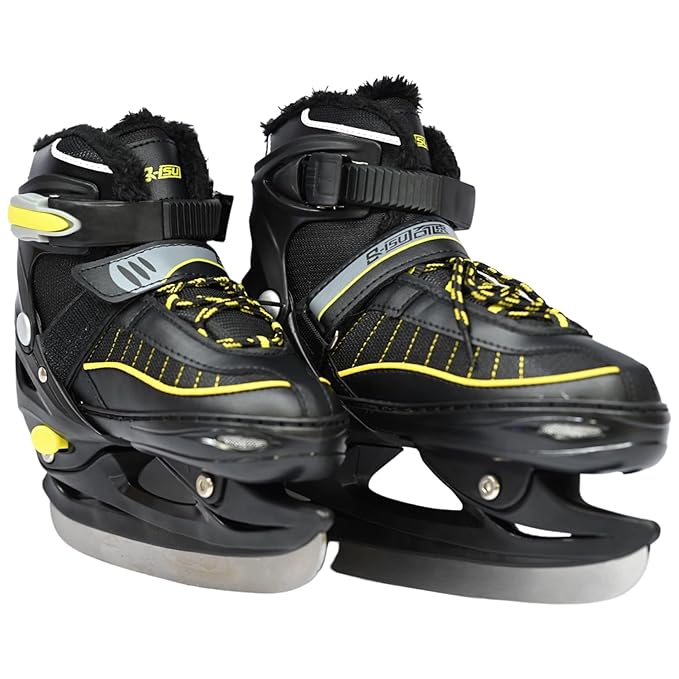
specialized footwear with metal blades fixed to the sole, used to glide across surfaces. They enable a range of winter activities: recreational gliding, ice hockey, figure skating, speed skating, touring, and more. Ice skates combine craftsmanship, material science, ergonomics, and performance considerations to deliver stability, agility, and control on slippery surfaces. They have evolved over millennia, from crude bone or wooden runners to high‑technology modern designs made with synthetic materials and precision steel.
Recto Skates ICE Adjustable Hockey Skates S/M/L (Size – Large (39-42 Euro))
₹5,501.00 Original price was: ₹5,501.00.₹5,500.00Current price is: ₹5,500.00.
Category: ice skates
Description
Skates ICE
Introduction
Ice skates are specialized footwear with metal blades fixed to the sole, used to glide across ice surfaces. They enable a range of winter activities: recreational gliding, ice hockey, figure skating, speed skating, touring, and more. Ice skates combine craftsmanship, material science, ergonomics, and performance considerations to deliver stability, agility, and control on slippery surfaces. They have evolved over millennia, from crude bone or wooden runners to high‑technology modern designs made Skates ICE with synthetic materials and precision steel.
Historical Evolution
Earliest Forms
-
The earliest known ice skates date back thousands of years (around 1800 BCE or earlier), where people used bones from animals (horses, deer, reindeer, etc.) strapped to their feet with leather, to help travel over frozen lakes and rivers. The Company of Biologists+3Riedell Ice+3Wikipedia+3
-
These bone blades did not have metal edges; to propel themselves, early users often used poles or sticks for pushing. The Company of Biologists+1
Transition to Metal Blades
-
Over time, bone skates were replaced with wooden platforms attached to iron or steel blades. Around the Middle Ages (1200s‑1400s), in parts of Europe (the Netherlands being notable), wooden base skates with iron runners were used. The Inventors+2FOX Weather+2
-
In 1850, E.W. Bushnell (USA) introduced the all‑steel skate, replacing the earlier designs that used wood footplates. This was an important jump toward modern skate design. Encyclopedia.com+2hellorollergirl.com+2
Later Innovations
-
The addition of the toe‑pick (saw‑tooth like teeth Skates ICE at the front of figure skate blades) happened in late 19th century, enabling technical figure skating jumps, spins, and toe work. Encyclopedia Britannica+2The Inventors+2
-
Boots themselves evolved from simple leather or strap attachments, to stiff, shaped boots with strong ankle support, padding, and synthetic materials. hellorollergirl.com+1
-
For speed skating and racing, blade and boot designs have refined to reduce weight, increase stiffness, improve blade steel quality, and optimize fit. Wikipedia+2Encyclopedia.com+2
Types of Ice Skates
There are several main types of ice skates, each optimized for different uses. Distinguishing between them is essential for choosing the right skate.
| Type | Primary Use | Distinctive Features |
|---|---|---|
| Figure Skates | Performance, artistic skating, jumps & spins | High, stiff boot; toe‑pick at front; curved blade edges; strong ankle support. Wikipedia+2Encyclopedia.com+2 |
| Hockey Skates | Ice hockey, ringette, recreation with fast turning & agility | Shorter, lower‑cut boots; blade optimized for quick acceleration & stops; usually protective materials. Encyclopedia.com+2Wikipedia+2 |
| Speed Skates | Racing, long straight glides, speed performance | Long, narrow blades; low‑cut boots to allow ankle flex; minimal restriction; sometimes clap‑skate designs. Wikipedia+2Encyclopedia.com+2 |
| Touring / Nordic Skates | Long distance, natural frozen bodies of water, casual travel | Blades longer and more stable; bindings that can accommodate boots; designs that can Skates ICE withstand variable ice conditions. Wikipedia+1 |
Basic Components & Anatomy
Every ice skate has core parts; understanding these helps in choosing or maintaining a good pair.
-
Boot
-
Purpose: Supports the foot and ankle, protects from cold and impact, transfers force to the blade.
-
Materials: Traditional leather; modern boots often combine leather or synthetic leather, plastics, polymers, foams, padding, and sometimes carbon or composite reinforcements. Wikipedia+3Encyclopedia.com+3jin-japanese.com+3
-
Construction: High, stiff sidewalls for figure skates; lower, more flexible boots for speed/touring. Fit is crucial: snug heel, secure mid‑foot and ankle to avoid slippage.
-
-
Blade
-
Metal Component: Usually steel (tempered, high‑carbon) or sometimes other alloys; the blade is the contact with ice and must be extremely Skates ICE rigid, sharp, durable. Encyclopedia.com+1
-
Edges: Hollow grind (a concave shape underneath) produces two sharp Skates ICE edges, which enable turning, carving, stopping. Without sharp edges, performance suffers. Wikipedia+1
-
Length / Shape: Varies by type: figure blades have curved shapes for maneuverability; speed blades are longer; hockey blades shorter for agility. Blade thickness and rocker (curvature front‑to‑back) affect how skate glides and turns.
-
-
Mounting / Holder
-
The mechanism by which blade is attached to the boot: rivets, screws, or bonded; also the holder (for hockey skates) or plate (for figure/ speed) that connects Skates ICE blade to boot sole. Good mounting ensures alignment and stability.
-
-
Support Features
-
Ankle Padding, Liners: For comfort and preventing blisters; also for support.
-
Stiffeners / Reinforcements: For figure and hockey skates, built‑in or external support to protect ankle and heel.
-
Toe Pick: Only on figure skates: a series of teeth Skates ICE at the front of the blade to help launches, jumps, spins.
-
Materials & Manufacturing
Blade Materials
-
High‑carbon steel is standard for many Skates ICE blades because it holds an edge well. Some brands use stainless steel or steel treated/coated to resist rust and wear. Encyclopedia.com+1
-
For durability, coatings or Skates ICE plating (e.g. chrome) may be used. Encyclopedia.com
Boot Materials
-
Leather: Durable, classic, molds to foot; may be heavier and require break‑in.
-
Synthetic leather / synthetic materials: lighter weight, often more weather/water resistant; modern hockey & speed skates often use composites, plastics, ballistic nylons, etc. Encyclopedia.com+1
-
Composite support materials: carbon fibre, Kevlar etc., for strength, stiffness, reduction of weight. Used especially in high‑performance skates.
Manufacturing Processes
-
Blade shaping: Grinding, hollowing, heat treatment, sharpening.
-
Boot construction: multiple panels, Skates ICE stitching, sometimes heat‑moldable liners for custom fit.
-
Assembly: blade to boot mounting, lining, finishing.
Performance Characteristics
How ice skates feel and perform Skates ICE depends on many interacting factors.
-
Blade Edge & Sharpness: Sharp edges grip the ice better for turns, stops, spins. Dull edges reduce control.
-
Blade Rocker: The curvature front to back (and sometimes side to side) that determines turning radius and how much of the blade contacts the ice. More rocker gives tighter turns, less contact; flatter blades give more stability and glide.
-
Boot Fit & Support: A boot that fits well (snug heel, good ankle support, no slippage) transfers power more efficiently and reduces risk of injury.
-
Stiffness vs Flexibility: Too stiff a boot may allow better power transfer but may be uncomfortable; too flexible can reduce control.
-
Weight: Heavier skates may provide stability but can be tiring; lighter materials help speed, maneuverability, especially in speed skating.
-
Blade Material & Finish: Resistance to corrosion; how well the blade holds sharpening; how smooth it glides over ice; resistance to damage.
Only logged in customers who have purchased this product may leave a review.
Reviews
There are no reviews yet.